Balmaseda
History
Oral tradition attributes the origin of the Via Crucis representation to the penitential pilgrimages that took place throughout the 16th century to Mount Kolitza, to pray to Saint Roque to free the Town from the plagues that devastated it during that time.
Without denying this version, the analysis offered by history and existing documentation allows us to deduce that the Via Crucis was born in the second half of the 19th century along with traditional processions, that is, with floats, to give greater authenticity to the representation of the Passion of Jesus and evolves to the current reality.
Already in 1771, several processions were held in Balmaseda, including those of Holy Week, as can be deduced from the allocation of a budget item for the corporation’s candle expenses when attending them. It was in 1829 when, after the re-founding of the Confraternity of the True Cross, it took charge of organizing the Town’s processions.
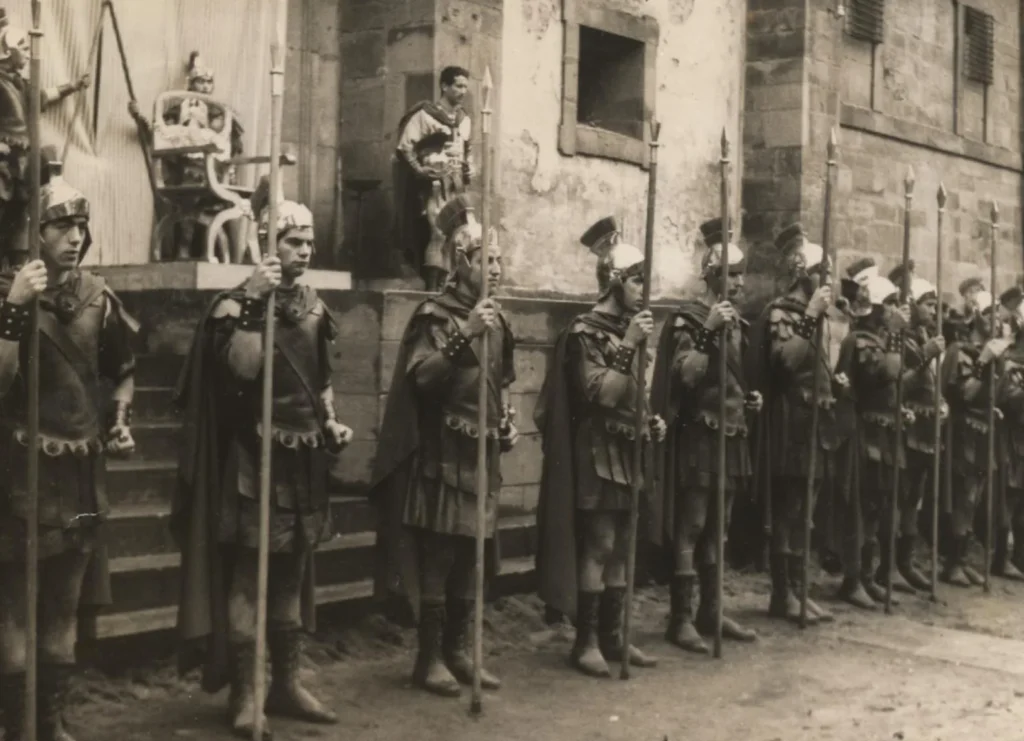
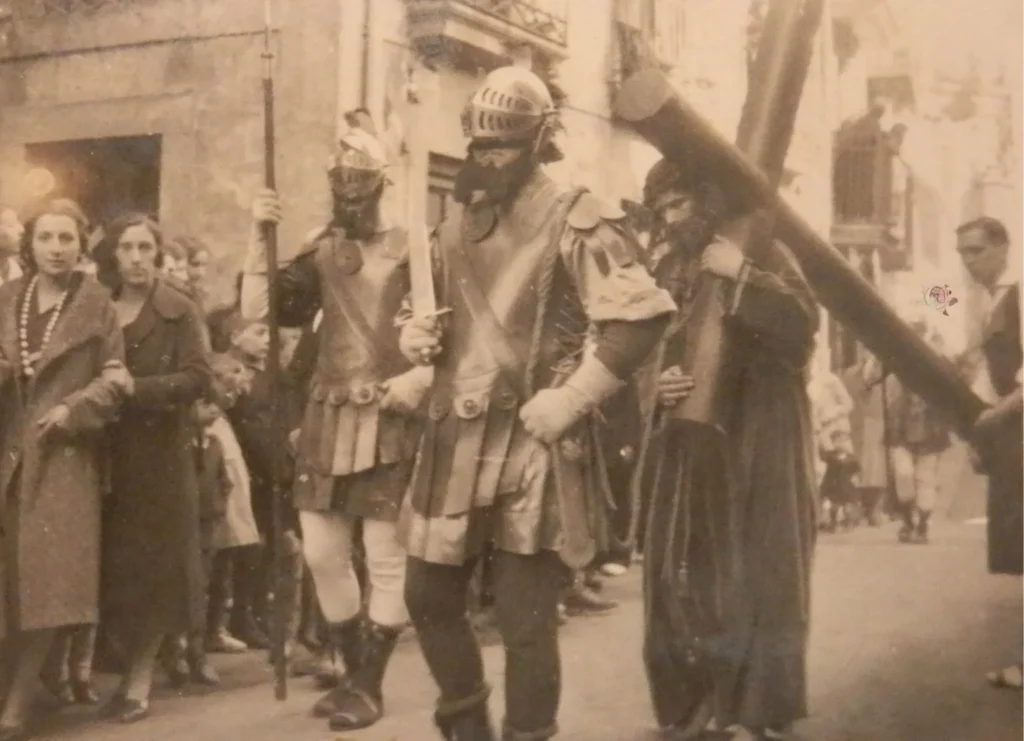
However, it wasn’t until 1865 that documentary evidence emerged of the appearance of figures who would accompany the traditional procession. In that year, the “Invincible Pharisaic Company” was created, introducing Roman soldiers, called “Pharisees” by the people of Balmaseda. At the end of the 19th century, more traditional figures such as the Marys, Mary Magdalene, Jesus, and Simon of Cyrene were added to the Good Friday procession.
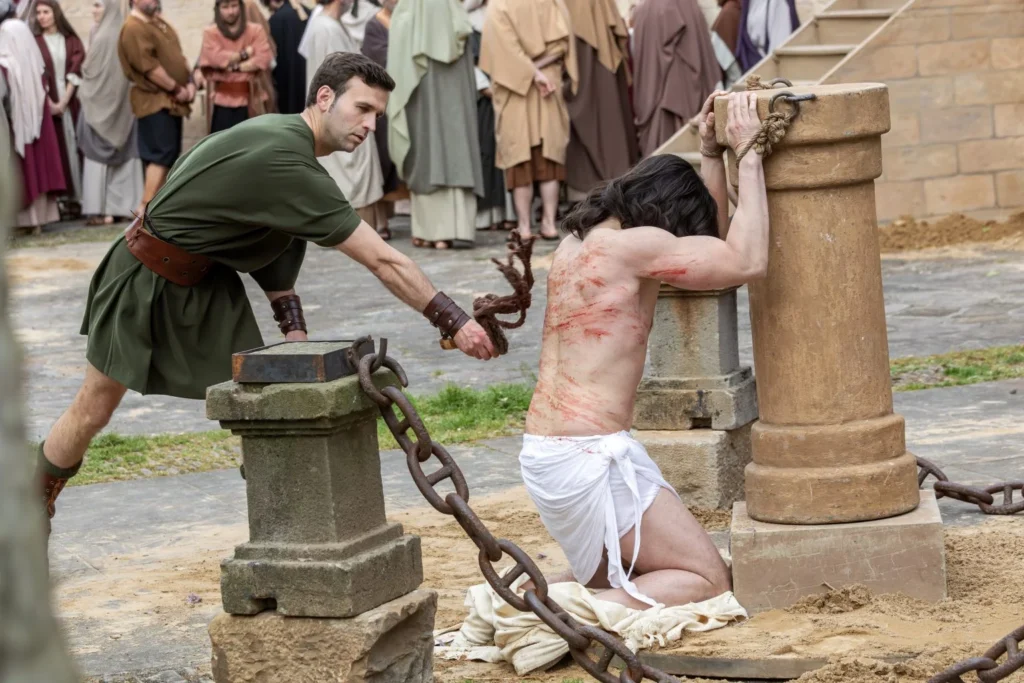
A significant change occurred in 1935 with the introduction of the reenactment of Pilate’s Trial, preceding the procession. This also added several characters, including Pilate himself, the High Priests, Barabbas, the pages, and others. This marked a turning point, leading to the addition of new figures and scenes, a process that continues to this day, reflecting the people of Balmaseda’s ongoing desire to achieve the highest levels of realism and fidelity in their Passion plays.
Currently, more than 650 people perform this representation, organized by the Balmaseda Via Crucis Association, heir to the ancient True Cross and with the collaboration of the Kolitza Choir.